

If you’re replacing your heating system before January, a high-efficiency heat pump is often an excellent choice for homes in Boone and the surrounding High Country, especially when properly sized for mountain temperatures. A furnace can still make sense for homes with natural gas or propane, higher heating demands, or homeowners who prefer strong, traditional forced-air heat. Some homes may benefit most from a dual-fuel setup that combines both technologies. The right answer depends on your home, existing equipment, fuel availability, insulation, and heating load—not simply which system has the biggest number on the brochure.
In this article:
–Heat pumps fit many Boone-area homes: Modern high-efficiency systems can handle High Country winters while providing both heating and cooling.
–Furnaces still make sense for some homes: Gas or propane systems can be a strong choice for homes with higher heating demands or existing fuel infrastructure.
–Proper sizing matters most: A Manual J load calculation helps homeowners in Boone, Blowing Rock, Banner Elk, and West Jefferson choose the right system for their home.
At Mountaineer Heating & Cooling, we believe in giving simple proposals, affordable pricing, and 24/7 service on a range of services. We’ve serviced northwestern North Carolina and eastern Tennessee for over 40 years. See a list of services and contact us today: 828.264.6625.
Heat Pump vs. Furnace: What’s the Main Difference?
A heat pump and furnace both keep your home warm, but they do it differently.
A furnace creates heat. Gas and propane furnaces burn fuel, while electric furnaces use electric resistance heating. The heated air is then distributed throughout the home through ductwork.
A heat pump moves heat instead of creating it directly. During winter, it pulls available heat from the outdoor air and transfers it indoors. In summer, the process reverses, allowing the same system to provide air conditioning.
Modern heat pumps are far more capable in cold weather than older systems many High Country homeowners remember. Properly selected equipment can continue heating effectively through the chilly temperatures Boone, Blowing Rock, Banner Elk, and West Jefferson regularly see.
That said, mountain HVAC systems need to be selected carefully. January is not particularly forgiving of guesswork.
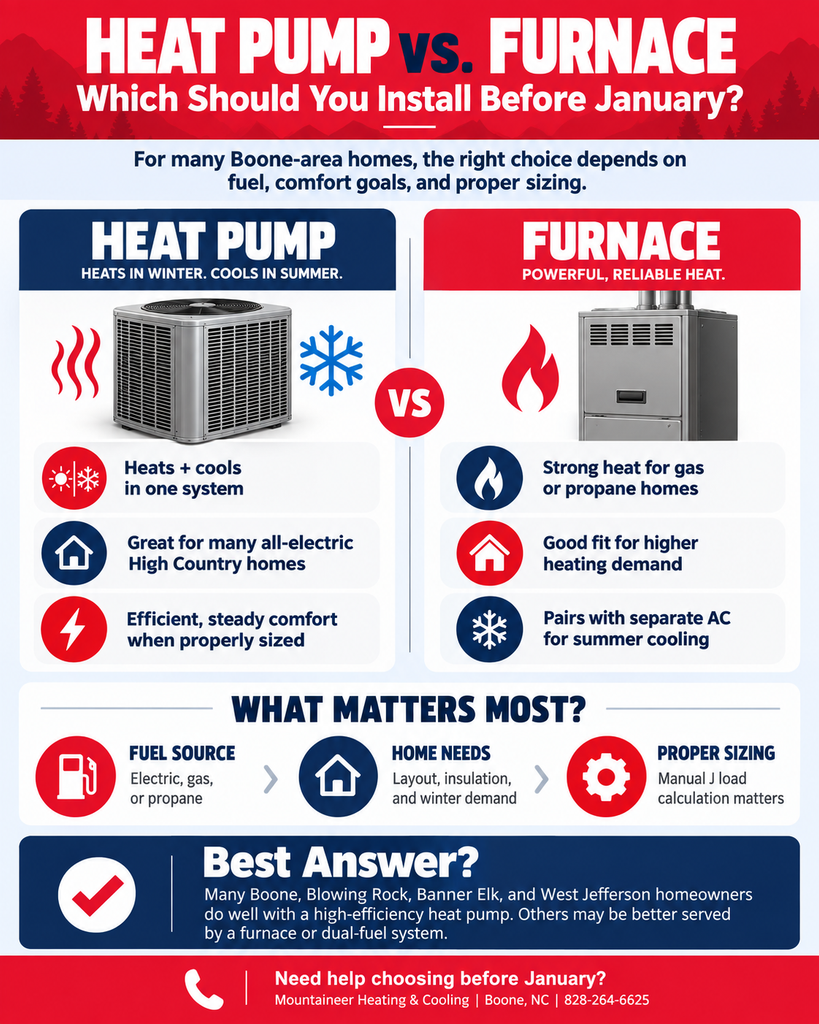
Why Heat Pumps Make Sense for Many Boone, NC Homes
Heat pumps have become increasingly popular because one system can handle both heating and cooling.
For homeowners replacing an aging HVAC system, that can simplify equipment while providing excellent energy efficiency.
Modern cold-climate heat pumps are designed to operate at temperatures considerably lower than traditional heat pumps could comfortably handle. Variable-speed technology also allows equipment to adjust its output gradually rather than constantly switching between full power and off.
This can help maintain more consistent indoor temperatures while reducing unnecessary energy use.
Heat pumps can be particularly attractive if your home:
- Uses electricity rather than natural gas or propane
- Needs both heating and cooling equipment replaced
- Has properly sized ductwork and good insulation
- Would benefit from variable-speed comfort
- Is being upgraded for greater energy efficiency
The important phrase there is properly sized.
Installing an oversized heat pump does not automatically give you better heating. In fact, improperly sized equipment can reduce comfort, efficiency, humidity control, and equipment life.
When Is a Furnace the Better Choice?
Furnaces remain a very practical option throughout the mountains of North Carolina.
Homes already connected to natural gas or propane may benefit from replacing an older furnace with a modern high-efficiency model. Furnaces can also provide strong heat output during exceptionally cold weather.
Some homeowners simply prefer how furnace heat feels. Supply-air temperatures from a furnace are typically warmer than those produced by a heat pump, which can make the air coming from the vents feel hotter.
A furnace may be worth considering if your home has unusually high heating requirements, existing fuel infrastructure, or an HVAC layout that makes furnace replacement more practical.
Your cooling equipment will still need to be considered separately. A furnace heats the home but does not provide summer air conditioning by itself.
What About a Dual-Fuel Heating System?
For some High Country homes, you don’t necessarily have to choose one or the other.
A dual-fuel system combines a heat pump with a gas or propane furnace.
During milder winter temperatures, the heat pump handles most of the heating efficiently. As outdoor temperatures drop and operating conditions change, the system can switch to the furnace.
It gives homeowners two heating technologies working together.
This approach can be particularly useful in mountain communities where November may feel surprisingly mild one afternoon and January can bring single-digit temperatures, wind, snow, and ice.
Boone vs. Charlotte: Your Heating System Has a Different Job
Heating equipment installed in Boone should not automatically be selected the same way as equipment installed in Charlotte.
Elevation matters. Winter temperatures matter. The construction of your home matters, too.
Older mountain homes, log cabins, large windows, vaulted ceilings, additions, limited insulation, and unusual floor plans can all affect heating requirements.
When it comes to choosing new HVAC equipment, square footage alone simply isn’t enough information.
Mountaineer Heating & Cooling performs a Manual J load calculation on every system replacement rather than estimating equipment size based primarily on the size of the existing unit.
A Manual J calculation considers factors such as insulation, windows, doors, building orientation, construction materials, air leakage, and local climate conditions. That provides a much clearer picture of how much heating and cooling your home actually needs.
Should You Replace Your Heating System Before January?
If your existing system is already struggling, replacing it before the coldest part of winter can save you from making an urgent decision after the heat quits.
Pay attention to signs such as inconsistent temperatures, unusual noises, repeated repair calls, rising energy use, or equipment that runs almost constantly during colder weather.
Fall and early winter also give you time to compare equipment and understand your options instead of choosing whatever happens to be available during an emergency.
Nobody enjoys researching heating equipment while wearing three sweatshirts inside the house.
Heat Pump or Furnace for Blowing Rock, Banner Elk, and West Jefferson?
The same basic considerations apply throughout the High Country, but every house is different.
A newer, tightly insulated home in Blowing Rock may have very different heating requirements from an older farmhouse outside West Jefferson. Likewise, a Banner Elk vacation property that sits empty during portions of winter may need different controls and equipment than a full-time Boone residence.
That is why Mountaineer Heating & Cooling looks at the building before recommending the equipment.
Our team installs dependable HVAC systems from manufacturers including Trane, Mitsubishi Electric, Carrier, and other trusted manufacturers. We can evaluate your existing equipment, calculate your home’s heating requirements, explain your options clearly, and recommend a system that fits the property.
Choose the Heating System That Fits Your Home
So, should you install a heat pump or furnace before January?
For many Boone-area homeowners, a properly sized high-efficiency heat pump can provide dependable heating, efficient operation, and summer cooling from one system. Homes with gas or propane, heavier heating requirements, or different comfort priorities may be better suited for a furnace or dual-fuel system.
The best choice starts with the house—not the equipment catalog.
Mountaineer Heating & Cooling has served homeowners and businesses throughout northwestern North Carolina and eastern Tennessee for over 40 years. If you’re considering a new heat pump, furnace, or complete HVAC replacement, call 828-264-6625 or visit us at 220 Postal St, Boone, NC 28607. We’ll help you find a simple, affordable comfort solution before January starts showing its teeth.
Check out other blogs:
- Boone’s Most Common Heating Repair Calls (And How to Avoid Them)
- Feeling Cold Spots? Here’s Why Your Heating System Isn’t Keeping Up
- Heating Maintenance in Boone, NC: Keep Your Home Warm & Cozy
- Essential Heating System Tips from Mountaineer Heat & Cool
- 9 Ways Boone Homeowners Waste Heat in Fall Without Realizing It
- Ductless vs. Central Air in Boone, NC—Which One Actually Saves You More?